Ade Monsbourgh and Pan Recorders — Geoff Hughes
[Geoff Hughes was a a popular, inspirational and enthusiastic school music teacher in Melbourne during the 1950s-1980s. He was a passionate educator, recorder enthusiast and a friend and associate of Ade Monsbourgh and Fred Morgan. Geoff shared this typewritten article with me when I interviewed him in 2012/13; he encouraged me to use the article in my research on Monsbourgh. He was quite ill and was kindly accompanied to the interview by his dear friend, Colin Smith, another recorder enthusiast who sadly passed in 2015. Geoff died in June 2013]
Jazz was monotonous, jazz was discordant, jazz aroused immoral thoughts, altogether Jazz was a bad thing. I knew this to be so because the books I read said so. During the mid-1940s I told my fellow Melbourne Tech Engineering students so. When they asked if I had heard any jazz, the gist of my reply was that I had not and didn’t want to. At that time, the Melbourne school of jazz was developing strongly, with successful tours by the Bells. Amongst those at the Tech at that time were some who have become well known in Melbourne Jazz circles.
As things Panned out, a change in direction led to me finding jazz. I did not complete the engineering course but took up my second choice; school teaching. To fit this new character, I bought a recorder in 1948 and taught myself to play.
In 1954, when I had a little recorder band at Bunyip State School, I read a paragraph in the morning paper about a record being released in which the ancient recorder had been used with a twentieth century jazz band. So, the next time I was in town, I went to Allan’s Music and bought a copy. The salesman told me that the recorder player, Ade Monsbourgh, was making school recorders in South Melbourne, so I resolved to pay a visit during the next vacation.
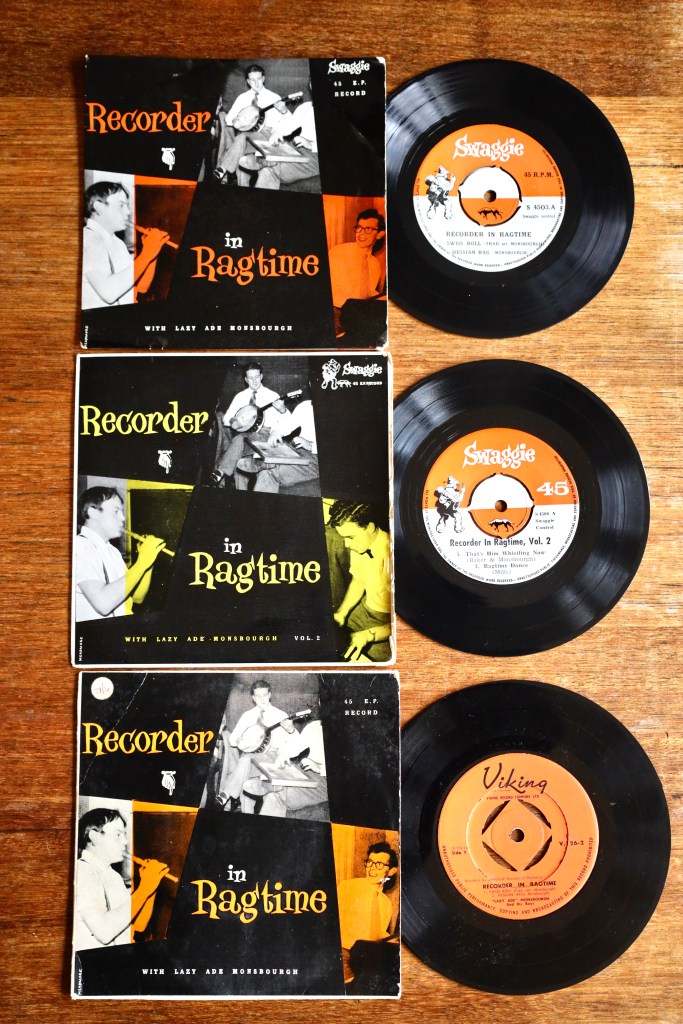
On playing the record, I was enraptured by both sides – the recorder piece (Whistling Rufus) and the straight jazz piece. I have not lost this love. My visit to Ade’s Pan Recorder Company started an association lasting over twenty years, involving jazz and folk music. This was not just myself, but my pupils also became involved.
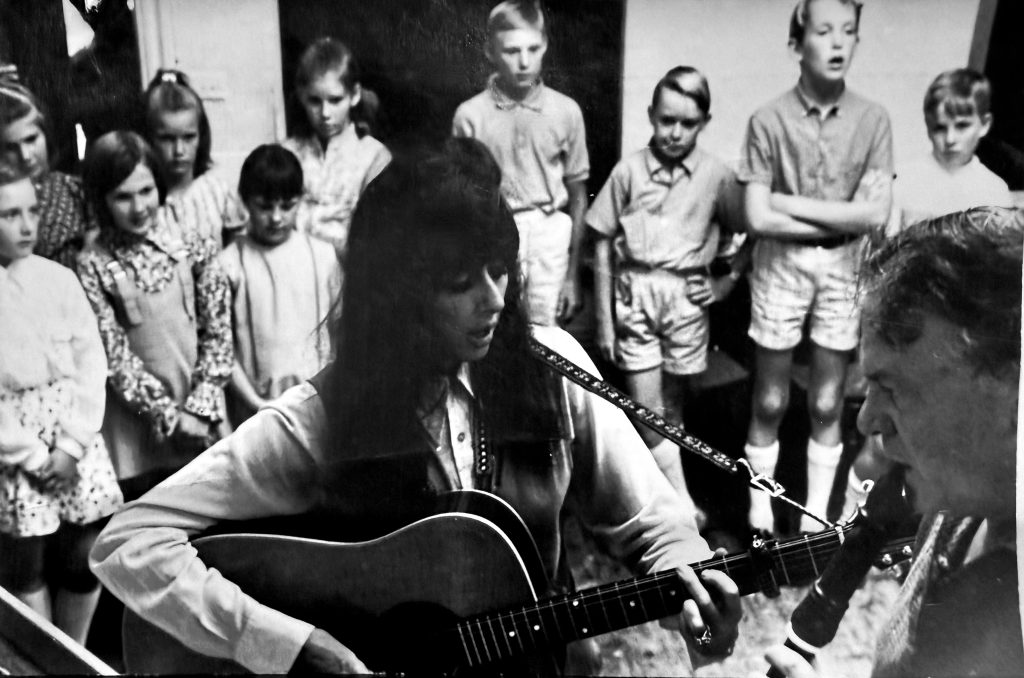
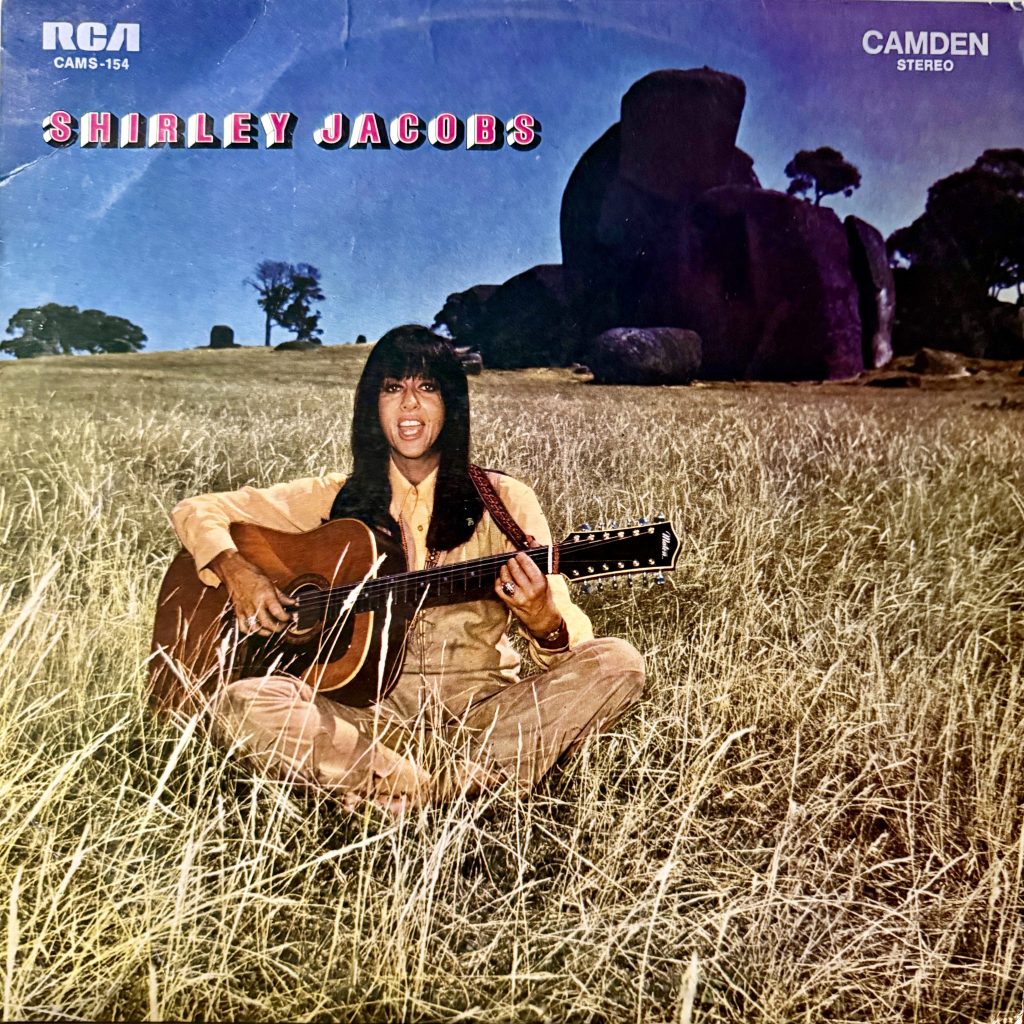
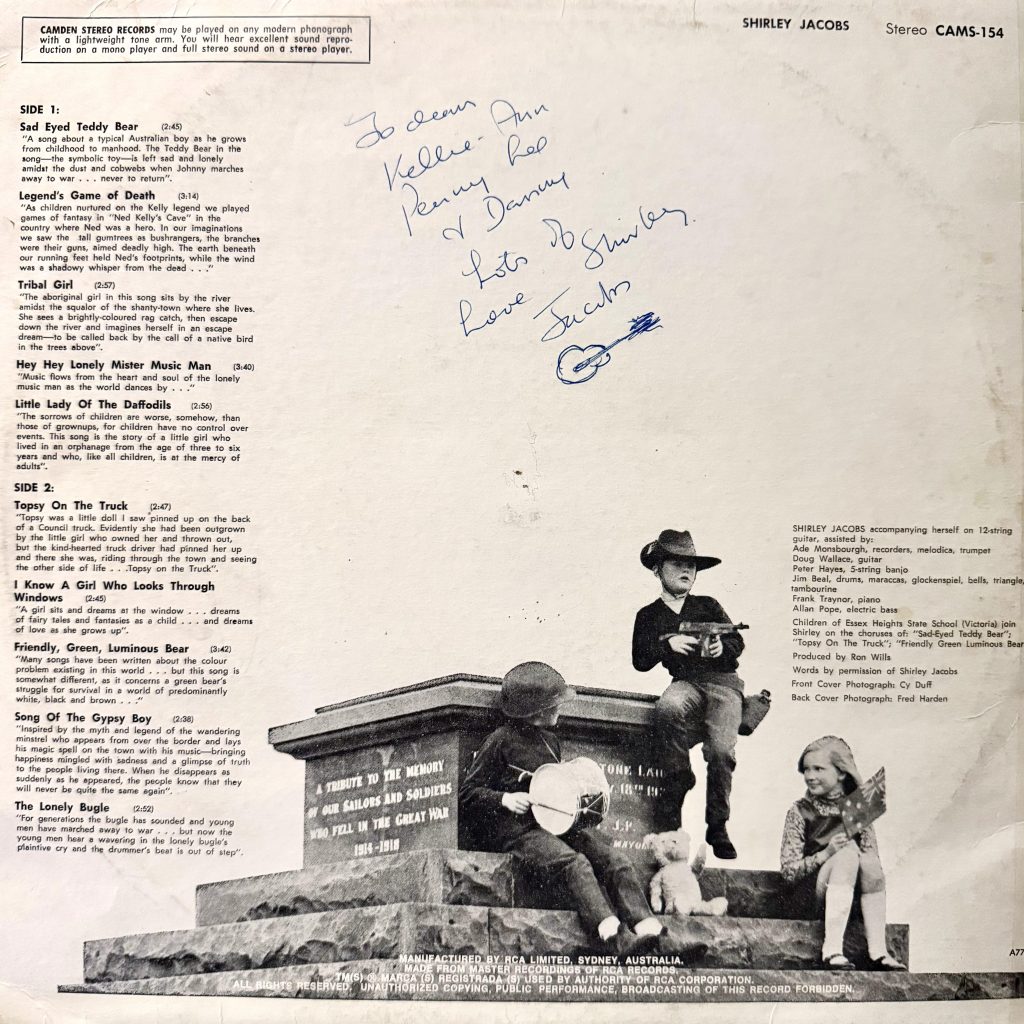
Ade used the recorder in many ragtime and jazz recordings, backed by sousaphone, banjo, piano and washboard. He got the idea that if he did a recording of one of the pieces set for the State competitions at the Prahran Town Hall, all the schools and kids would rush out and buy a copy. That year’s set unison piece for Recorder Bands was “Vo Luzerne”, so “Swiss Roll” was born. (i.e. Morton’s “Jelly Roll”). He was often called upon to play in radio commercials. As one of these was about to be put down, Ade learnt that there was an extra fee for an original composition, so he provided them with one. A friend of mine was amazed when during a jazz concert, the audience rose to their feet and cheered when Ade appeared with his recorder. Later, in the sixties and early seventies, Ade used recorders in a backing group for records by Shirley Jacobs. Several times he borrowed my Dolmetsch recorders whilst I supplied a group of child singers (Essex Heights Primary) and assisted by a doing a bit of conducting.
Click on images above to view in larger format
Ade employed me in his factory during the school holidays, paying me firstly in recorders, which I sold at school, but later in money, as I was taking the best of their production.
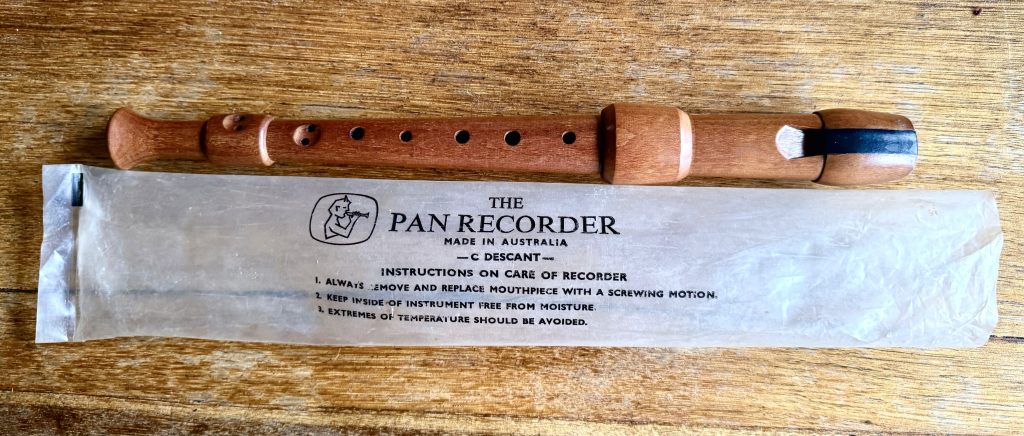
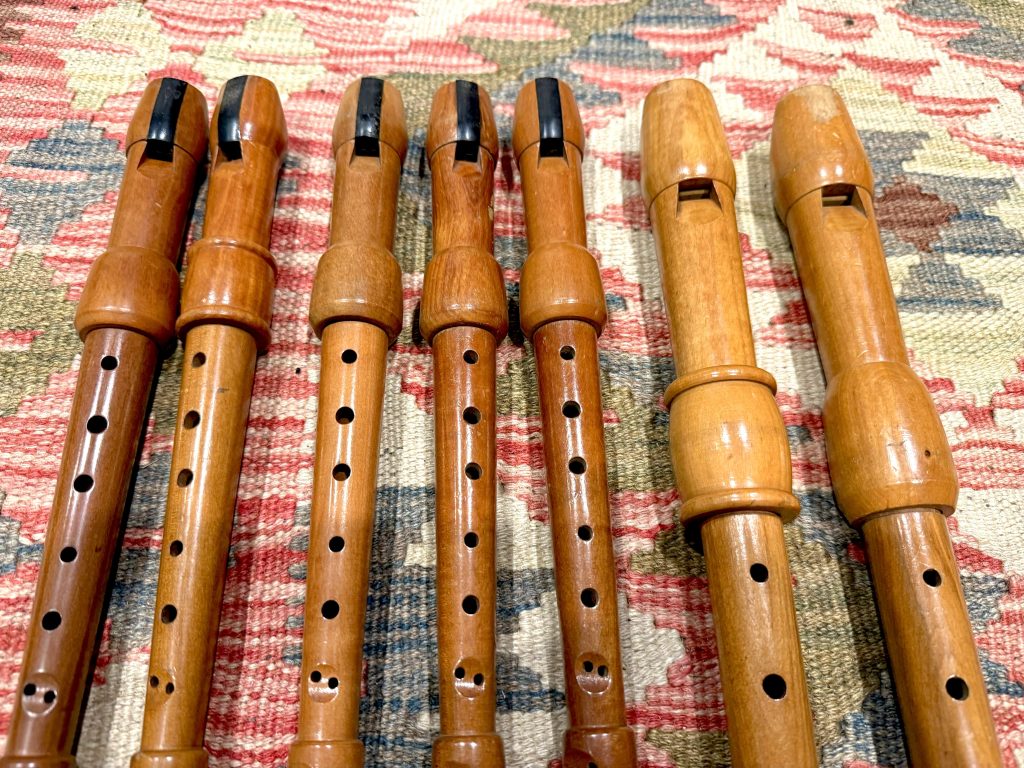
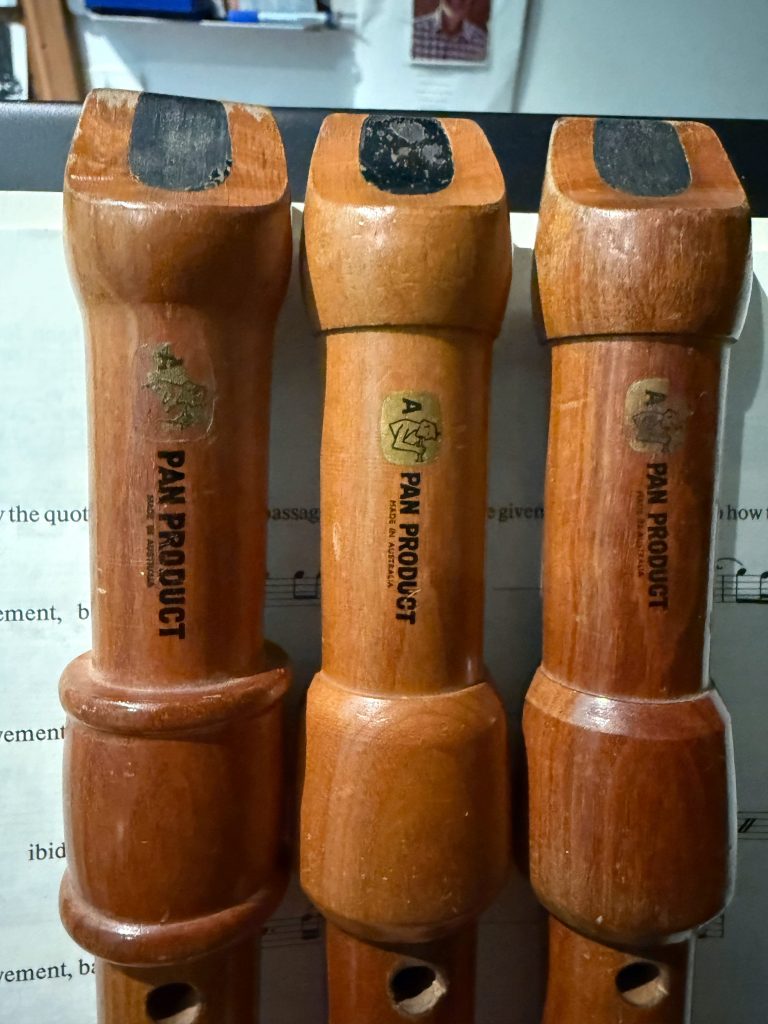
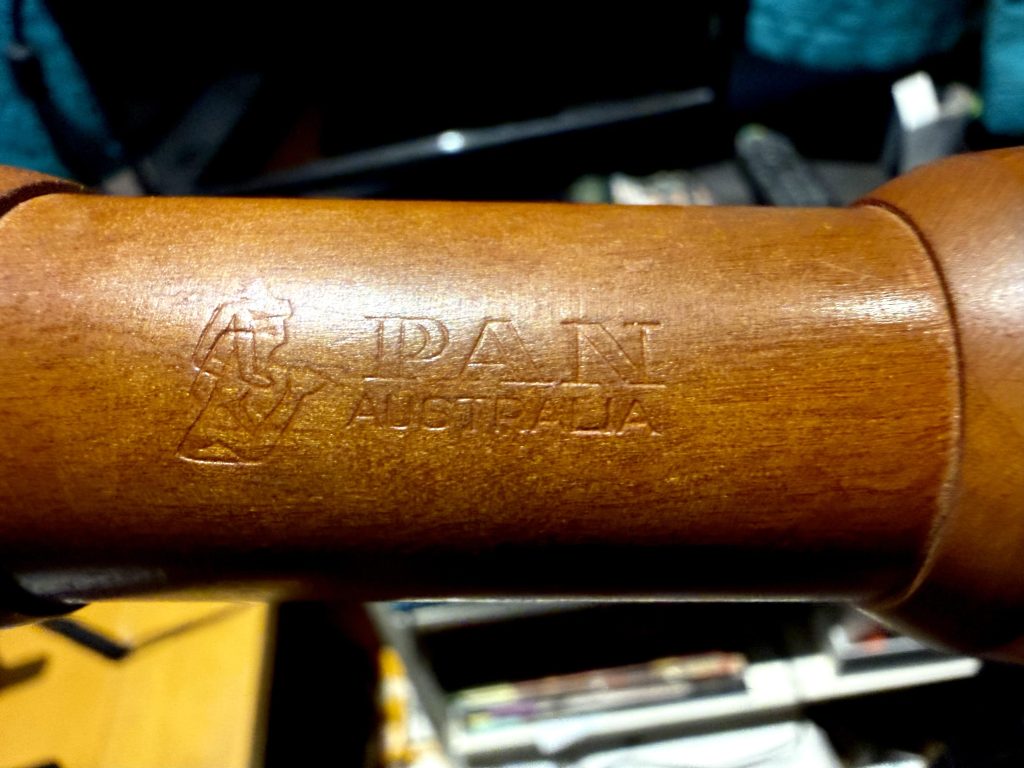
The wood being used was Tasmanian myrtle. This was suggested by the CSIRO, after Pan consulted them (actually, a jazz musician who worked there came up with the idea). The recorder heads and barrels were turned up by a firm of repetition turners, with finer work being done in the Pan workshop on a lathe, using hand-tools and sandpaper. Work on the holes was done with a cutting tool made from the handle end of a hacksaw blade. These were very sharp. There was a moment of shock-horror and stunned silence when Ade slipped and sliced the base of his thumb. Our faces showed our thoughts; “He’ll never play again!” (Ade, the “Father of Australian Jazz”, was a multi-instrumentalist). However, apart from a loss of alcohol – sorry, blood – Ade was all right. When all shaping and tuning had been done, the bits were soaked in an oily shellac. This brought out beautiful patterns, so that each recorder had an individual appearance. The most striking, but not so common, were those with a red marbled effect.
Click on images above to view in larger format
The next process was to dry the bits and rub them down with steel wool in preparation for the finish to be sprayed on. Ade’s trousers became impregnated with dried shellac, and there was a fear that he might fall over and break his trousers. This shellac stage was later abandoned in the pursuit of a quicker production rate. The scoop purchase of a heap of boot-lasts gave rise to a run of yellow speckled recorders. For a while, laminated wood was used. There was forever a search for better wood and faster production methods. One time-saver was the cutting of the windway in one action, leaving a slot in the top of the mouthpiece. This was filled with a strip of plastic. Hence, this was known as the “Mohawk” model. Panic! While the wood moved with variations in moisture, the plastic did not, and poor kids found their recorders disintegrating! This led to the use of a complete plastic windway (and better adhesives). If requested, special turning (at a special price) could be provided for the three sizes (descant, treble and tenor)
Across the lane from the City Road Pan workshop (South Melbourne) was the warehouse of a large hardware firm. A wall panel became dislodged, displaying porcelain furniture (i.e. toilets) destined for ‘small’ rooms. This led to various comments about ‘chamber music’.
Struggling jazz players would pop in seeking advice. After trying to explain to them some principles of music, Ade would say that those people (self-taught and playing by ear) would never get anywhere. He claimed he had got where he was because he had had 15 years of classical piano. A different style of visitor was Dave Dallwitz, the South Australian (now Sydney) pianist, band leader and composer. We would try out his latest recorder pieces, which included little pieces for two descants and treble, which were played by a couple of school groups, but were not published. Some joint compositions of Ade and Dave for two recorders have been recorded, but with clarinets replacing recorders. The approach of these two men was a contrast. Ade was very much an improviser, with little written down. Dave was organised, with things properly set out.
The Pan Recorders firm moved to a more salubrious location at the rear of a newsagent in Auburn Road, handy to Rippon’s hotel. About this time, the descant player in my consort, a young bloke by the name of Fred Morgan, asked for vacation work. He found he liked recorder making, stayed on and later became the proprietor. Although the name “Pan” disappeared, Fred still makes recorders, but not in the same quantities. There was a large loft in the rear section used for storing wood and stuff. One day, there was a great crash – the bottom had fallen out of the loft, and whole lot had collapsed! In the “Credit Squeeze” of the sixties, of course, the bottom fell out of everything, which is how Fred was able to buy into the firm.
The money I earned was put to good use to give me a higher standard of living. One Christmas holiday’s pay of forty pounds enabled me to buy another Austin 7.
The competition from floods of high-quality cheap Japanese recorders made the wooden Pans an unpopular choice for schools. As I wander from school to school as an Emergency Teacher, I still find pupils playing a Pan recorder handed on from a parent.
There are still Pan-Handlers out there!
- Geoff Hughes [written in the 1980s (?) when Geoff was still working post-retirement as a CRT (casual relief) teacher in Melbourne]
NOTES BELOW — from an interview I had with Geoff Hughes in 2013 regarding Ade Monsbourgh and Pan Recorders
Geoff started primary school teaching in 1951 and met Ade Monsbourgh in 1953. He worked for Pan Recorders in the school holidays for 6-7 years.
Geoff taught at Coatesville Primary, East Bentleigh from 1959-63.
Ade toured with the Graeme Bell Jazz Band in Europe in the 1940s/early 50s and brought home to Australia some Schott plastic recorders from England (also Dolmetsch wooden altos).
Geoff suggested that to learn more about Ade, I should research/contact John Hanson (wood turner for Pan) Roger Bell, Fred Morgan, Don ‘Pixie’ Roberts, Neville Stribling and Neville Sherburn (Swaggie Records).
The Pan factory/workshop was originally at City Road, South Melbourne. It was next door to the back of a taxi garage. Pan then moved in the late 1950s/early 1960s to 33 Hall Street, Hawthorn into a little factory building. A young Fred Morgan joined as an apprentice then (1959). Next Pan moved to Auburn Road, Auburn (near Riversdale Road). There was an area at the back of this building which was used as a timber loft. The loft once collapsed, trapping Fred, Ade and John Hanson (Pan wood turner). They had to carefully climb out. The workshop/factory was next to the Auburn Road Newsagent and on the next corner was Neville Sherburn’s pub. The final location for Pan was nearby at No 3 Hall St, just off Tooronga Rd, Malvern. There is a classy office building there now.
Due to the impacts of early 1960s credit squeeze, Fred and John (and John Rippon) made an offer and purchased Pan from Ade.
Allan’s Music were the sole distributors of Pan recorders for Victoria. “We make the recorders and Allans make the money”, Ade used to say. Pan made descant, treble and tenor recorders – the sopranino used in Ade’s Recorder and Ragtime piece, Pipes of Pan, was a wooden Adler.
Ade was employed by Allan’s as a music salesman/spruiker and used to put on ‘shows’ in school classrooms to promote Pan instruments and Allan’s. He was quite a comedian, and some of his gags, especially using cigarettes, simply wouldn’t be appropriate today. Here are a few examples:
“You must be so quiet that you can hear a pin drop” … pause …. BANG! His musical collaborator (Jim Beal) would whack a drum loudly.
He would ask the children to stand for the National Anthem, then sing Tie Me Kangaroo Down Sport.
Ade would say “If your mum says to keep away from the recorder, then play it like this” – his classroom associate (John) would use an air pump attached to the headpiece/windway, pump in air, and Ade would finger the notes.
Ade was a smoker and had a few recorder gags using cigarettes and cigarette smoke to ‘delight’ and ‘wow’ the children. One involved a sleight of hand where he inserted an unlit cigarette into the small end of the joined recorder foot joint and barrel, quickly sucked the cigarette through the barrel into his lips and instantaneously made the recorder ‘disappear’. Another was to take a lit cigarette and blow smoke through the windway of an intact recorder and make smoke ring patterns as the smoke exited from the finger holes. Exciting, but different times!
Geoff, his brother and Ade would sometimes play Handel trios together.
1. Other published articles by Geoff Hughes
— Memories of the Early Life of Frederick Gilbert Morgan – Recorder and Early Music No.24, Victorian Recorder Guild, 2000, pp. 8-10
— Victorian Recorders before the Guild – The Recorder No.14, Victorian Recorder Guild, 1991, pp. 18-20
2. Other published articles by Rodney Waterman on Ade Monsbourgh
— Recorder in Ragtime – This article first appeared in The Recorder, journal of the Victorian Recorder Guild, No.6, June 1987, pp.26-27
3. Other references to Pan Recorders


Leave a Reply